

Research Methodology
Learn how Ecemy researches, verifies, and preserves fintech provider information.
Every report published on Ecemy is built to answer a simple question:
Can this information be trusted to support an important business decision?
That question influences every part of our research process. Rather than aggregating opinions, review scores, or marketing claims, Ecemy conducts structured, point-in-time research using publicly available evidence and publishes the results as a dated snapshot.
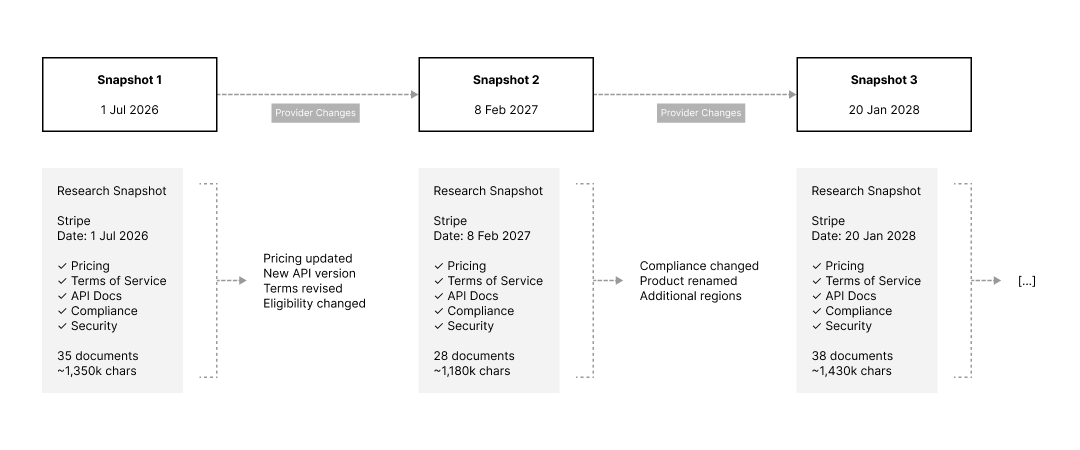
Each listing represents what could be verified at the time the research was conducted. We intentionally preserve those snapshots instead of continuously modifying them, creating a historical record of how fintech providers evolve over time.
Research Principles
Our methodology is built around four principles.
- Evidence before opinion: Every statement in the analysis is traceable to verifiable evidence.
- Primary sources whenever possible: Official docs forms the foundation of every report.
- Human accountability: Every published analysis is reviewed before publication.
- Historical preservation: Every research is preserved as dated snapshots.
These principles exist to produce reports that remain useful long after publication, whether the reader is evaluating a new integration or revisiting how a provider's policies have changed.
Primary-Source-First Research
The core analysis published on Ecemy is built from publicly available primary sources.
Depending on the provider, these may include:
- Product documentation
- API references
- Pricing pages
- Terms of Service
- Privacy policies
- Security documentation
- Compliance documentation
- Help centers and FAQs
- Public legal disclosures
- Official integration documentation
When additional context is required, we may reference authoritative public records such as company registries, regulatory databases, or other official sources that support factual claims about the business itself.
We intentionally exclude sources whose primary purpose is opinion or user-generated content. Community discussions, affiliate websites, review platforms, forum posts, social media discussions, and similar sources are not used as evidence for the core analysis.
The objective is not to collect the largest possible number of sources. The objective is to collect the most reliable ones.
Public Accessibility
Ecemy conducts research exclusively on information that is publicly accessible. We do not access private customer portals, bypass authentication systems, circumvent paywalls, or rely on confidential or non-public materials when preparing reports.
Every source included in our research is available through public channels at the time the snapshot is created, allowing our analysis to remain transparent, reproducible, and grounded in information that can be independently verified.
Human Oversight
Artificial intelligence is used throughout the research workflow to assist with tasks such as source discovery, document organization, and drafting analytical summaries from large collections of documentation. Editorial responsibility, however, remains with a human reviewer.
Each report is overseen by a single reviewer responsible for the complete research cycle—from source collection and curation through analysis review and publication. This provides continuity throughout the process and ensures that editorial decisions are made with full context of the evidence collected for that report.
Plain-English Analysis
Technical documentation, legal agreements, and compliance disclosures are often written for specialist audiences and are not intended to be read together. Ecemy's role is to organize this information into a structured analysis that is easier to understand without changing its meaning.
Rather than reproducing lengthy excerpts or simplifying away important details, we summarize verified information into a format that helps readers understand the provider's policies, operational characteristics, and potential considerations while preserving the intent of the original documentation.
Zero Guessing Policy
Accuracy takes precedence over completeness. If a material data point cannot be verified from the evidence collected during research, Ecemy does not present it as fact. Instead, the report explicitly indicates that the information could not be confirmed or was not found within the available sources.
Missing information is not interpreted as evidence of absence, and gaps are never filled through inference or speculation. A report may therefore contain incomplete sections where the underlying documentation does not provide a verifiable answer.
Point-in-Time Research
Every Ecemy report represents a point-in-time assessment of a provider based on the information available when the research was conducted. Fintech products evolve continuously through changes to pricing, legal terms, eligibility requirements, compliance policies, product capabilities, and operational procedures.
Rather than continuously modifying an existing report as individual changes appear, Ecemy publishes research as dated snapshots. Each snapshot reflects a complete review of the provider during that research cycle and should be interpreted within the context of its publication date.
Historical Source Archive
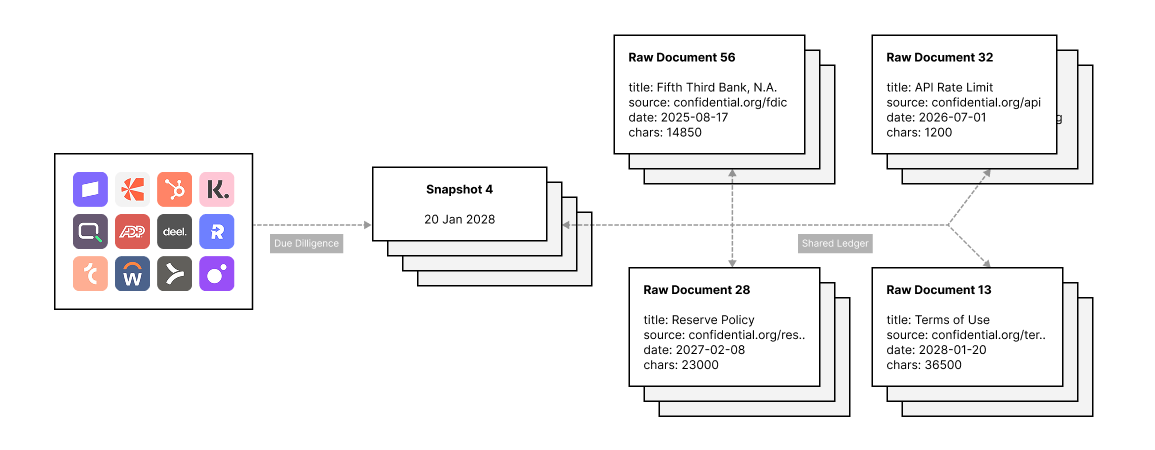
The documentation collected for each research cycle is preserved as a timestamped archive supporting the published analysis. Earlier snapshots remain intact even if the provider subsequently updates, relocates, or removes the original documentation from its website. This approach creates a historical record of publicly available information over time and allows past analyses to remain reproducible within the context in which they were originally published.
Why Reports Are Published as Snapshots
Many software directories continuously revise existing listings to reflect the latest available information. While this approach keeps a single page current, it also removes historical context and makes it difficult to determine when specific policies or disclosures changed.
Ecemy instead treats each publication as a complete research snapshot. Subsequent changes by the provider are incorporated through future research cycles rather than incremental edits to previous work. This preserves the integrity of earlier analyses while establishing a chronological record of how a provider's documentation evolves over time.
Scope of Ecemy
Ecemy is an independent research directory focused on fintech software and financial infrastructure. The platform does not publish user reviews, community ratings, sponsored placements, or affiliate rankings. Reports are intended to organize publicly available information into structured analyses that assist readers in evaluating and comparing providers based on documented evidence rather than popularity or anecdotal experience.
Research Partnerships
As the archive expands, it also becomes a growing historical record of publicly available documentation across the fintech ecosystem. Organizations conducting vendor due diligence, legal review, compliance work, market research, or comparative analysis may find value in historical documentation snapshots or custom research derived from the archive.
If your organization is interested in discussing research collaborations or historical datasets, you are welcome to email us at [email protected].